
The purpose of this product is to promote wellness and lifestyle independence for older adults through enhanced regular emotional and physical support, while also helping them stay connected to loved ones and healthcare professionals.

Project Scope:

The scope of this project involved conducting research to inform the design of a unique product to encapsulate a smart assistant with features to specifically aid older adults (65+) with everyday tasks, staying connected to loved ones, and monitoring emotional health and physical wellbeing. The team approached this problem by:

  • Establishing key user needs through personal interviews and focus groups
  • Investigating current market trends and similar products
  • Reviewing literature to inform the design of effective interfaces for target audience
  • Developing a basic outline for the AI (smart assistant)
    • Refining through additional usability testing
  • Developing a prototype of a graphical user interface for the product’s display
    • Creating a conversational interface mock-up (flow diagram)
    • Creating the visual interface mock-up (AdobeXD prototype)
  • Refining the above design documents through testing and expert feedback
  • Exemplifying usage scenarios and product integration
    • Producing a proof of concept rendering
    • Demonstrating integration in home and lifestyle through storyboarding

Our group began initial user research by first completing a CLIMBER analysis to develop a better understanding of our target audience:
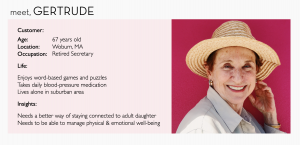
After performing our CLIMBER analysis, the team had two major questions to explore in further background research:

What technology do people over 65 often use?
What mental and physical health routines and check-ins does our target audience need?

We conducted interviews with several older adults in Davis Square and over the phone. Their answers often surprised us, and helped shape our understanding of their technical proficiency, interest in similar technology and health devices, and how they spend time in the home and with loved ones.


I don’t know what these new fandangles are, I go with the flow… If it wasn’t for my daughter I wouldn’t feel as young as I feel.” (Davis 3)

When I am at work, I interact with my colleagues and I generally text or call my daughter every day.” (Phone 1)

I’m pretty much a couch potato at home, so I would say reading and watching streaming videos (is how I spend my time.)” (Phone 2)

After conducting the interviews, we had a better idea of who we were designing for. We then worked to familiarize ourselves with the market for smart-assistant based products. We investigated what products are already out in this space, and how people are using them.


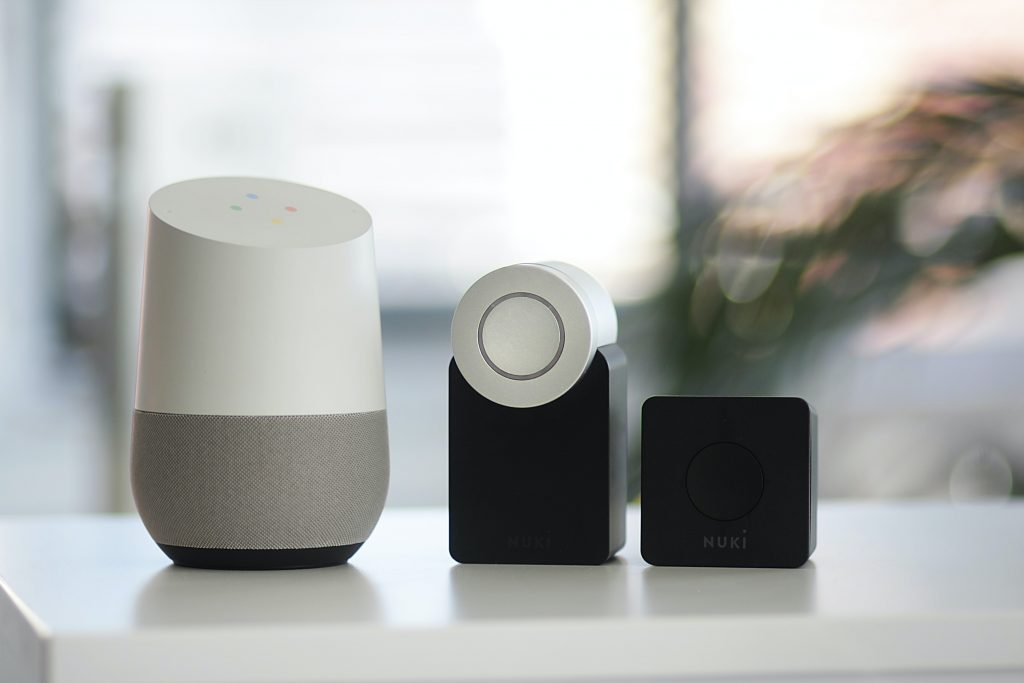
Interestingly enough, our market research revealed that smart speakers are more popular than any other form of tech among seniors (Kats,2018). This point alone certainly validated the proposed direction for the project, as it appears many older adults already like the kind of user experience that assistants such as Apple’s Siri and Amazon’s Alexa afford. Smart speakers are popular among older adults for a variety of reasons, but just a few are that:


  • They have sensitive microphones that can aid older folks who might have limited mobility with their tasks.
  • They have the potential to prolong independence while also reducing the sense of social isolation, especially for older adults who live alone.
  • ”Smart” accessories for smart assistants/speakers are becoming popular for simplifying household maintenance and essential tasks.

Some products already exist or are in development for this niche space. LifePod, for example, is a smart speaker designed specifically to enhance the connectivity between remote caregivers and aging adults who are alone in their homes. Certain skills have been developed for the Amazon Alexa, such as Ask Marvee, that provide content tailored for older audiences.

We also looked to the internet to read existing Human Factors research that would be relevant to our project. Some potential conditions that our target demographic may live with include decline in auditory acuity, decline in visual clarity, difficulty focusing on objects in close range, and latency in processing visual stimuli (Stephanidis & Antona, 2013). Knowing this, we realized it would be crucial to avoid certain usability concerns that could make it strenuous for our target users to interact with the device. We realized that Bridge would need to have a clear navigation system, use high contrast colors that are easy on the eyes, match the user’s mental model of similar applications, and avoid having excessive animations or a very complex visual display.